
In recent decades, the weight of the services sector in the economy of Western countries has increased notably, motivated in part by a massive relocation of the productive sector. However, now it is the tertiary sector that is being relocated and in several countries the return of manufacturing companies is an upward trend.
The return of certain industries is largely motivated by the impact of transport, industry 4.0 and a change in demand.
Transporting a good entails not only a significant variable cost, but also precious time between production and delivery of the good. There is also the risk of incidents of a different nature and an ecological footprint whose fiscal and social impact is expected to be increasingly negative. It is more than likely that the regulation will impose greater visible traceability on the product and this will affect its consumption even more decisively. Issues such as production conditions or the aforementioned ecological footprint will therefore be key differentiating elements. Similarly, the increasing regulation and export and import tariffs imposed by several countries recently, diminish the attractiveness of keeping certain operations away from the consumer.
On the other hand, Industry 4.0, called to considerably increase productivity, is intensive in cutting-edge technology, requires professionals with very specific training and requires a network of connected entities that facilitate the transition. In the main western cities, special attention is paid to these factors, in a kind of race to have the most complete ecosystem to house these industries.
The investments in industry made by Da Gayo Inversiones are framed in this context. On the one hand, positions have been opened in consolidated external projects and, on the other, own production plants have been developed in subsectors in which demand, competition and the factors indicated in the previous section allowed for an advantageous position.
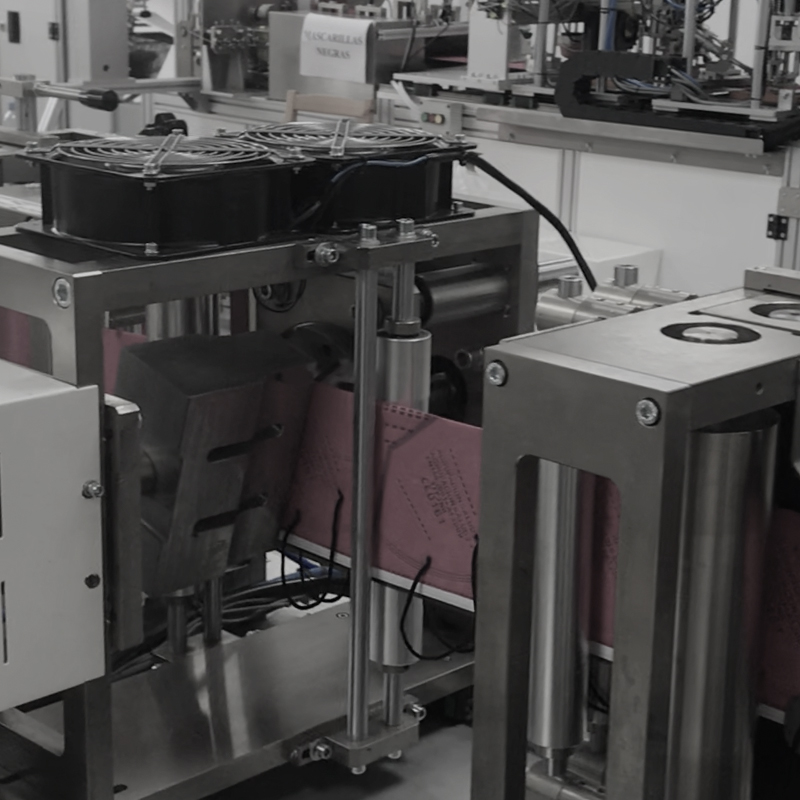 Personal Protective Equipment manufacturing plant in Madrid, Spain, owned by Da Gayo
Inversiones Globales
Personal Protective Equipment manufacturing plant in Madrid, Spain, owned by Da Gayo
Inversiones Globales